


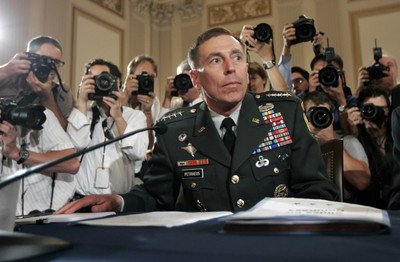
Petraeus on the Hot Seat While Presidential Politics Play Out on Capitol Hill
In Washington the Senate armed services and foreign relations committees held hearings regarding the state of the Iraq war and the three main candidates for the White House in November made sure to make the most of it. While questioning the commander of forces in Iraq General David Petraeus and Ambassador to Iraq Ryan Crocker, it was clear that the three main candidates for president, John McCain, Hillary Clinton and Barack Obama were keenly aware of the political implications of the hearings they were taking part in.
While McCain was very openly supportive of the idea of a continued presence in Iraq, calling any precipitous withdrawal of troops a “failure of political and moral leadership” Senators Clinton and Obama clearly wanted to make it known that they were in favor of removing troops from Iraq sooner rather than later. For Petraeus the hearings took on a more personal meaning as he was likely being interviewed by his future boss in the form of one of the candidates. While being seemingly frank and honest in his assessments it was clear that he knew who the players in the room were and did not go out of his way to challenge any of the assertions being put forth by any of the candidates. The overall tone of the hearings was much more civil than prior Congressional hearings on Iraq involving Petraeus.
What seemed clear was that all parties involved were not just looking to uncover the facts of the current situation. From the tone of the discussion to the seeming willingness to accept most things at face value, it was clear that nobody involved had a strong desire to start a political fight during the hearings. One of the more pointed discussions that did occur was around the current financial situation with the Iraqi government. The committee members on both sides of the aisle seemed bothered by the idea that the Iraqi government may be sitting on billions of dollars of oil revenue while the American taxpayers are paying for the reconstruction efforts in Iraq. Senator Carl Levin from Michigan took exception at the idea that America is still financing the reconstruction of Iraq while at the same time Americans are forced to pay high gasoline prices due to the cost of oil including that coming out of Iraq. With the cost of oil over $100 per barrel the oil revenues in Iraq have skyrocketed in recent months and Senator Levin made it clear that he felt that Iraq could be doing more to support their own nation.
During his time in the foreign relations committee hearings, Senator Obama pressed Petraeus on the question of what constitutes success in Iraq. One suggestion made by the freshman senator from Illinois was that the bar for adequate success to remove significant American troops may be set too high by the current administration and military leaders in Iraq. Senator Clinton also noted some disappointment with the current strategy noting that the current troop levels in Iraq have failed to produce the political gains needed for a stable Iraq and were depriving needed forces from the efforts to root out al Qaeda in Afghanistan.
At the end of the day what was most clear was that little will change in the current strategy in Iraq before the end of the current administration. The clear frustration of some within Congress not withstanding it seems evident that the General and Ambassador have no intentions of changing their current strategies in Iraq. The Bush administration has made it clear that the troop levels felt needed by the commanders on the ground will be supported by the White House and short of not funding the troops, there is little Congress can do about it prior to the November elections and a change of administration in 2009 leaving the current hearings little more than window dressing for the presidential campaign currently underway.
Troy Wilson-Ripsom - Staff Writer | Give your feedback on this article.
