



Special Education: Important to Whom?
It is estimated by the CDC (Centers for Disease Control) that 1 in 150 children in America are autistic based on reporting since 1991. This does not take into account the children in certain cultures who will not be tested because of the stigmas associated with mental disabilities within those cultures. When you take those numbers into account, autism could be much more prevalent than anyone has previously suspected. Many professionals in the mental health profession believe the number is more likely around 1 in 80 children have some form of autism. Behaviors that were once written off as being the result of a child being “a little slow” or “high spirited” are increasingly being identified as behaviors indicative of autism spectrum disorders.
If you accept that the number of children with autism is only 1 in 150 kids, that’s over two million Americans that potentially are suffering from the disorders associated with autism such as Asperger's or the more severe classic autism. The numbers associated with diagnoses of autism spectrum disorders has increased more than 660% in the last 20 years, however, the diagnosis of the more severe, classic autism, has shown only a very slight increase of about 2%. This is important, because it means that the vast majority of newly diagnosed autism cases are children that can, with the proper interventions, therapies and education, grow up to function relatively independently. These disorders trap otherwise normal children in worlds of social isolation and delayed development. The isolation does not get better with age either. As the child grows into adulthood without treatment, they become increasingly unable to handle social situations and in some cases become permanent wards of the state, often ending up in prisons or mental institutions or financial burdens on their families trying to pay for their long-term care. These otherwise intelligent and capable people have been so crippled by their social interaction issues that they cannot function or contribute to the society simply because they were not treated as children.
Many will say that is all well and good but it’s not the responsibility of the schools to deal with them. Why not? Are they less deserving of an education than neurologically typical children? To deny them the services they need to be integrated into society is akin to saying that children in wheelchairs should not have ramps installed for them because the other kids don’t need the ramps. Should these kids be denied an adequate education in America because it’s inconvenient for school districts to serve them? According to the Federal government, no, that's why the 1991 landmark legislation, Individuals with Disabilities Education Act (IDEA) and its subsequent renewals and amendments have included autism and other developmental disabilities - it clearly states that individuals with autism are to be given a "Free Appropriate (and individualized) Public Education" (referred to as FAPE). However, there is a HUGE gap between the letter and spirit of the law. And Federal mandates don't equal local funds nor do they provide training for educators on how to work with special needs children. There's also the matter of legal interpretation by administrative judges - if a parent somewhere dares to challenge their school district and say that their child is not receiving FAPE the chances are that the administrative judge will rule in favor of the school district. Politicians are quick to cite budget shortfalls and marginalize these kids because they are the minority of the students when trying to justify their callous disregard for their needs but they are never quick to discuss budget cuts that would cut their salaries or expense accounts or travel budgets. How is it that the children are less important than the politicians being able to wine and dine on the taxpayer’s dime?
The answer for some is to stick them in rooms away from the rest of the kids and let the “Special Education” teacher deal with them. The problem with that approach is that it doesn’t address the problem of integrating them into society. It is not that the children are incapable of learning - they simply learn differently than their peers. In the cases of children with developmental delays and social integration issues, they need to be around other more typically developing children in order to observe and emulate normal behavior. Locking them away with other kids that also don’t comprehend appropriate social interaction simply deepens their isolation from others and re-institutionalizes a system of separate and inherently unequal education. The answer is integration and increased staffing of schools with staff that are properly trained to deal with the challenges of integration.
The truth of the matter is that these kids will grow up and they can either be a burden on the system or productive members of society. The choices we make about their education as children will be the determining factor in which direction these kids go. Keep in mind these are the same kids that will one day be the workers supporting our retirements. If we shortchange them now we are doing nothing short of cutting off our noses to spite our faces. As much as people want to scream “special treatment” and that this is taking away resources from the other children, the cold hard reality is that the people we elect to lead us have the power to give budgetary priority to education both for special needs children and for children without disabilities. They make the choice to spend money on tax cuts for the wealthy that could be used to fund schools. They choose to give no-bid contracts to their friends for billions of dollars when they could have saved money by bidding the project and used the savings for our future. The only real budget shortfall is a judgment shortfall on the part of our politicians regarding what is important and who needs the funds the most.
We can choose the direction of our future but we must always take into consideration the importance of looking to the future in the day to day decisions we make. Our leaders have often failed to look to the future when giving away the farm to the people who fill their campaign coffers. We also need to remember that just because something is not readily recognizable as being in the best interest of the majority does not mean that it won’t bring greater benefit to the majority in the long run. Specialized education for disabled students and mainstreaming programs give children born with challenges the opportunity to become productive members of society as adults. Think about the alternative and ask yourself if they can’t function normally in society, what will become of them and who will bear the burden of the decision to not help them now? Either way, our tax dollars will be spent on these people. They can get special education and learn how to contribute to society or we can wait and fill up our adult care facilities with them when they can’t function in society. The money will be spent on them one way or another. We can either get a return on our investment or not.
Article by: Troy & Nikole Wilson-Ripsom | Give your feedback on this article.
Getting Involved
The biggest issue with a lack of involvement in America seems to be the lack of ability of people to put aside their comfort and convenience for the greater good. That can be a really big challenge for people. It’s hard to work for something day in and day out when you only see minimal gains and even sometimes suffer a defeat or two along the way. It is much easier to turn on the TV and bemoan the troubles of the world on the news than it is to go and take the time to educate ones self about the issues and find out what you can do to help. That first step is the most important for most. The second, third and fourth steps are often much easier than the very first step. It takes resolve to say “I’m going to learn about this and see what I can do to make it better.” and then to actually do it. Once you begin to really learn about the needs of the world, it becomes harder to not get involved. It is harder to turn your back on a suffering child once you’ve seen their face and even harder once you’ve held their hand. Once the problem has a face, it is much easier to find the motivation to keep working to make the situation better. Once you see that so little effort on your part can make such a big impact on others, it becomes easier to get out of the chair and get into the game.
The television writers strike has presented an opportunity of sorts to America. For the next few months we are not going to have a lot of new things to watch on television. There are a few new shows coming on but not a lot. This time of television wasteland will free up hours of time for other things. There are a lot of causes and organizations that need help. If you’re bored with re-runs why not do something more interesting?
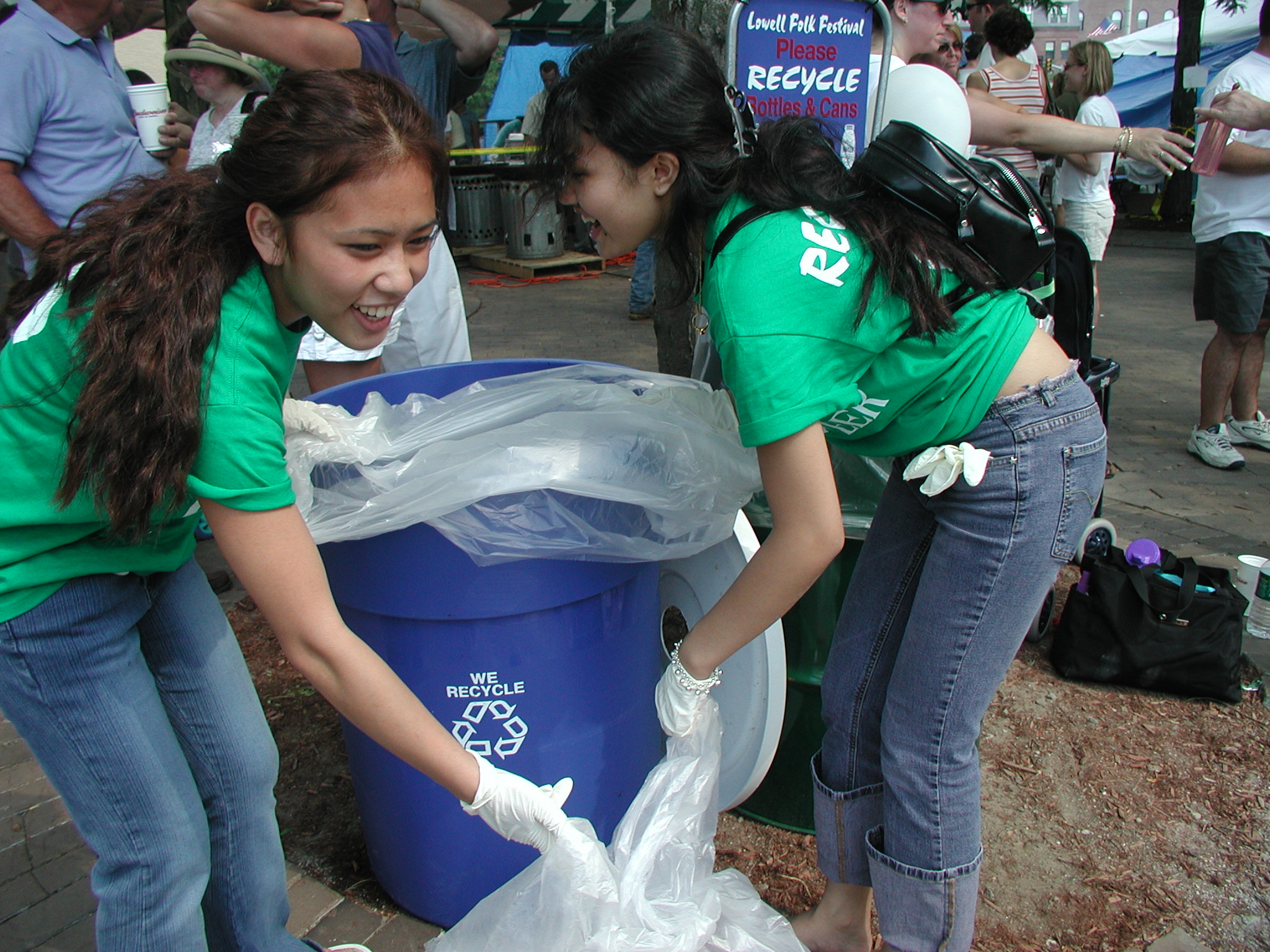
To those who have said they want to get involved but just don’t seem to have the time, I invite you to pledge to give up a single one hour television show this season and use that hour every week to get involved in something to improve the world around you. Just one hour per week of doing something to help others can make a huge impact on them. Spend one hour sitting with an elderly person who doesn’t have a family. Spend an hour helping a person to learn how to read. Spend an hour crushing cans for a charity recycling drive. Spend an hour separating your trash until all the recyclables are separated from the non-recyclable garbage. Just one hour per week can make a difference.
To those who don’t think they need to get involved, I invite you to spend an hour per week reading a couple newspapers without looking at the Entertainment, Sports, Business, Classifieds or Comics. Just read the news and ask yourself if there aren’t people that could use your help. Take the time to find out if maybe you aren’t a little more needed than you thought you were. The rewards are immeasurable and at the end of the day, when people talk about your life, you will be remembered for what you gave to the world.
And to those who think that other people’s problems don’t concern them, I invite you to pick up a history book and read how little events caused larger events over time. While the despair of another might not impact you today, it could tomorrow. Left unchecked, despair spreads like a disease. The misery of one group may be visited on another through any number of means. Violence is commonly rooted in despair and those attacked often are not those who brought the misery but might have been able to ease the pain that drove the violence. Apathy to suffering is a fool’s course to follow. The wise man is a generous and giving man in that they are not spreading misery that could one day visit itself upon them.
There comes a time in every person’s life when they need to decide if they are going to sit on the bench or get into the game. Different things can tip the scales one way or another for anyone. For some the decision to get involved happens because of a tragic event in their lives that change everything about their perception of the world. For others there is a deep need to feel the joy of helping others. For any individual the choice is a personal one that shapes the direction of their life. Maybe your decision can be to cure the boredom of a season without new TV shows.
For me the catalyst was the birth of my son. When I first held him in my arms and looked into his eyes, I knew that I must fight to change the world for him. Whenever I feel tired of the fight and weary of beating my head against the wall of closed minds, I sit and watch my son play. His simple joy in the innocence of youth is all I need to see to remind me that there are a lot of little kids depending on me and my generation to make sure the world doesn’t come crashing down around the next generation’s ears. We who are in the driver’s seat at this moment in time have a responsibility to pick up the reigns and drive this nation in the right direction.
The question of which direction is right should be simple. If the direction preserves the world and makes it more peaceful for the next generation then it is probably the right one. If it causes young people to die and causes people to want to kill our children, more than likely, it’s not a good course of action. If it makes the planet healthier for the future, it’s not a bad idea. If it causes the air to not be breathable or the water to not be drinkable, it’s probably a bad thing to do. Simple common sense tells us that things that put poisons in the air and water are bad. Simple logic also tells us that if we hurt other people they will want to hurt us back and might not feel right until they get even. Doing the right thing is much simpler than many make it out to be. Just being kind to others is a great start and taking time out to spend it being kind to others is as much as anyone can ask you to do.
Get off the bench and get involved. Find something you can be passionate about and do your part to make the world better. It is your responsibility and it does impact you. If not you, who? If not now, when?
Troy Wilson-Ripsom - Staff Writer | Give your feedback on this article.
 Get Involved Do you sit and yell at the TV when politicians come on? Do you shake your head sadly whenever you see a homeless veteran? Is that all you tend to do? It's time to put up or shut up America. We all love to talk about how we could do things better or how we would do it if we were in charge. Well, it's time to put your money where your mouth is. If you can think of it, you can write it down. If you can write it down, you can type it. If you can type it, you can e-mail it and if you can e-mail it, you can send it here. We at Reform America are committed to giving voice to anyone who wants to put their ideas out there to make our nation a better place. As the readership grows, we are able to take those views to a wider and wider audience. Grassroots campaigns begin with voices speaking out. You have opinions. Voice them. We aren't about conservative or liberal. We aren't about pro-this or anti-that. We're about Americans and the First Amendment. Reform America is about politics by, for and of the people. You are the people. You only need to speak up. America is listening. Send your article to: stories@reform-america.net |
|
|
|
|

